Summary
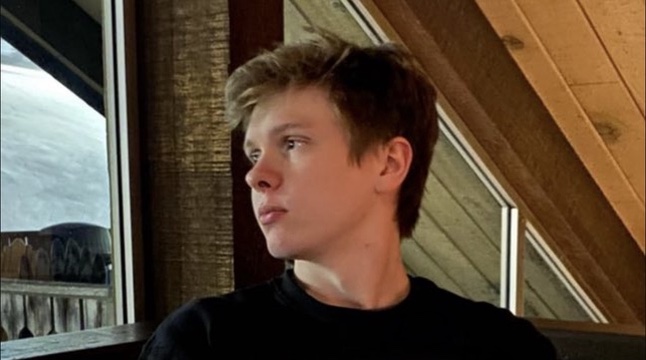
My name is Craig Fouts :) I'm a passionate
scientist/bioengineer interested in building
mathematical models of living systems. My current work
involves developing in silico methods for
anatomical niche discovery in histological spatial-omics
data. Previously, I worked as an associate computational
biologist in the New York Genome Center's
Technology Innovation Laboratory,
then as a computational research engineer in the
Department of Immunology, Genetics, and Pathology
at Uppsala University, where I designed statistical
models and machine learning tools to elucidate genomic
morphology in spatial transcriptomics data. Before that,
I obtained an MS in applied mathematics from Columbia
University after receiving a BS in computer science and
mathematics from The Ohio State University. Outside of
academia, I enjoy inline skating, playing the violin,
and building cool stuff.
Projects
Some experiments with self-organizing systems and
emergent behavior. Current methods include a Vicsek
active matter model, an n-body simulation, and a
branching-annihilating random walk. Also a test bed for
RunTime, a Python framework for building
real-time interactive environments in Jupyter notebooks.
Semantic segmentation models and dimension reduction
algorithms applied to point cloud data. Current methods
include variations of latent Dirichlet allocation, some
amortized topic models, and a neural clustering process.
Also a test bed for ATLAS, a nonparametric topic
model for discovering spatial niches.
Some experiments with generalizing neural cellular
automata (NCA) to dynamic point clouds using
graph convolutional networks. The models are trained to
parameterize a nonlinear recurrence relation that,
provided an initial "seed" state, converges in finite
time to a unique target state via local message
propagation.
A knowledge-based web application for robotic access
and retrieval via IBM Watson. The application
provides an natural language interface for directing a
Webots simulation of two robots collaboratively
operating a virtual warehouse. Users can query the
warehouse's contents and submit items for
deposit/retrieval.
A webcam-based utility designed to provide an
accessible mode of computer interaction for
people with impaired mobility. Users can perform
ASL-inspired gestures for 3D manipulation of objects in
Autodesk Fusion and general mouse control in Microsoft
Windows. Built for HackOHI/O 2021,
where it won first place.
Research
2023 ALIFE
Ettore Randazzo, Alexander Mordvintsev, Craig
Fouts
2022 ALIFE
Alexander Mordvintsev, Ettore Randazzo, Craig
Fouts
Connect